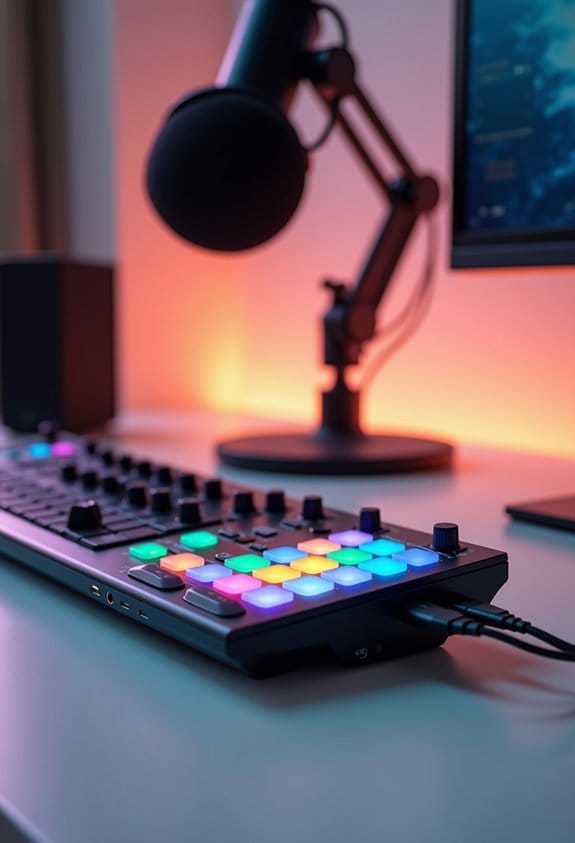
When comparing continuous lighting and flash lighting for video content, both have pros and cons. Continuous lighting offers real-time visibility and easy adjustments, but can struggle in bright environments and may require higher ISO settings. Flash lighting, on the other hand, provides high power and freezes action, great for clarity but less ideal for video due to syncing issues. This can leave you wondering which suits your project best. Discover more about these lighting options for enhanced video results.
Key Takeaways
- Continuous lighting provides real-time visibility of light effects, making it easier for video creators to adjust settings as needed during shoots.
- Flash lighting offers high power output, allowing greater control over ambient light and producing clearer images with lower ISO settings.
- Continuous lighting tends to be quieter and more consistent, ideal for live video setups, while flash lighting can introduce syncing complexities in video production.
- Using softboxes with continuous lights can create softer shadows, while flash can enhance dramatic effects for specific scenes in video content.
- Combining both lighting techniques can achieve well-balanced shots by establishing even light with continuous lighting and adding highlights with flash.
Understanding Continuous Lighting for Video Production

Continuous lighting is such a handy tool in video production, and I can’t emphasize how much easier it makes the whole process! Imagine being able to see exactly how your lighting affects the scene as you set up—pretty cool, right? You can adjust the lights on the fly, so getting that perfect look becomes much more intuitive.
One of the most popular types of continuous lights you’ll find are LED lights. They’re great because they use very little power and last a long time, up to about 50,000 hours! Plus, they have adjustable color temperatures that can range from a warm 2700K to a bright 6500K, which is fantastic for creating different moods. For example, if you’re shooting a cozy indoor scene, you might want a warmer light, whereas a daylight scene would need that cooler tone.
Another awesome aspect of modern continuous lighting is that it operates silently. This is super important when you’re recording audio, as it keeps background noise to a minimum. Many setups come with modifiers like softboxes, which diffuse the light and soften shadows, creating a more flattering look for your subjects.
Having control over the power and color temperature really helps you get natural skin tones and a consistent vibe throughout your video. This can elevate your project significantly! It’s also helpful to mount and position your lights securely using suction mounts for stable and adjustable setups. So, whether you’re just starting out or looking to refine your lighting game, continuous lights are definitely something to consider in your toolkit. Now, let’s talk about how to position these lights creatively to enhance your storytelling!
Understanding Flash Lighting for Video Production

Hey there! So, let’s chat about flash lighting in video production. Even though continuous lighting is the go-to option for many videographers, flash lighting has its unique role that’s pretty interesting to explore. You see, flash lighting is mainly designed for still photography, delivering quick bursts of light when you click that shutter. This can create some inconsistencies in your video, especially when things start moving. Imagine filming a scene with action—it might look a bit choppy if you’re relying solely on those short flashes!
Another thing to think about is that strobes typically operate at a daylight-balanced temperature of around 5600K. That sounds great in theory, but in practice, it can limit your options when it comes to mixing lights, especially if you’re shooting in settings with different color temperatures. Plus, flash lighting requires you to sync your camera’s shutter, which can make setup a bit more complicated.
Now, don’t get me wrong—strobes have their perks! They pack a punch when it comes to output, making it easier to banish unwanted ambient light. However, they don’t give you that steady glow that video often demands. So, while flash lighting is fantastic for freezing motion, navigating the challenges of using it for smooth video can be tricky. If you’re looking for that seamless flow in your footage, it’s often better to stick with continuous lighting. But, knowing when and how to use flash lighting can also create some awesome effects, like capturing that perfect moment during a live performance. Consider also how integrating studio-grade effects can enhance your lighting setup for more dynamic results.
Advantages of Continuous Lighting for Video Content

Hey, have you ever thought about using continuous lighting for your video shoots? It’s pretty amazing because it lets you see how the light affects your scene in real-time. This means you can make instant tweaks to get the perfect shot without any guesswork. For instance, if you’re filming an interview and notice shadows on the subject’s face, you can simply move the lights around until it looks just right.
Another great thing about continuous lighting is that it operates quietly. This is a huge plus for sensitive shoots—like interviews or documentaries—where background noise can be distracting. Plus, if you go with LED lights, they can last up to 50,000 hours! That’s a lot of filmmaking without worrying about replacing bulbs all the time.
And here’s a cool tip: you can adjust the color temperature on many of these lights, usually between 2700K and 6500K. So, whether you want a warm, cozy feel or a bright, daylight vibe, you’ve got options. It’s not just about getting the right light; it’s about creating the mood you want for your content, which is super important.
Continuous lighting is also budget-friendly, making it a smart choice for beginners—think YouTubers or vloggers just starting out. With all these benefits, it’s clear why many videographers are leaning towards continuous lighting for their projects. Ready to learn about other essential gear for videography? Let’s keep going! Continuous lights often include adjustable brightness and color filters, which give you even more creative control over your scenes.
Recommended Products

Curved gaming display (1800R) – the best gameplay immersion

High CRI Chip LEDs paired with 1/2 stop soft diffusion panel

[ Low Noise Level ] Equipped with 2 layers of soundproof laminated glass, and Acoustic Insulation Structure walls 6 layers (Aluminum frame structure, Film-laminated Steel Panel, PET Sound-absorbing Board, Eco-friendly Acoustic Panel, Premium Textured Fabric), the booth achieves 35dB(±5dB) reduction, ensuring a peaceful, private workspace.
Benefits of Using Flash Lighting in Video Production
Hey, have you ever thought about using flash lighting in video production? It’s a fantastic tool for filmmakers that really opens up creative possibilities, especially when you want to step away from the softer continuous lighting methods. Flash lighting packs a punch with higher power output, which helps to overpower ambient light. This means you’re left with a clean and controlled space for your videos.
One of the coolest things about flash lighting is how it can freeze action. Imagine shooting a fast-paced dance scene or a sports moment; flash lighting captures those moments without any motion blur. It’s pretty impressive, right? Plus, if you’re out in the field or in a spot without power, battery-operated flash units are perfect for portability. Just think about how liberating it is to shoot outdoors or in unique locations without worrying about outlets!
Powerful flash systems also let you create some dramatic lighting effects. Just picture how you can set a specific mood or highlight a subject really well. When you use low ISO settings with flash, you’ll end up with clearer images—less noise and a sharper look overall. It can truly elevate the quality of your video, leaving other videographers in awe of the results. Now, if you’re curious about how to effectively integrate these techniques into your projects, I’d love to share more tips!
Additionally, many modern setups incorporate energy-efficient LED lighting to reduce power consumption while maintaining high-quality illumination.
Recommended Products

SONY ALPHA A6400 CAMERA WITH 18-135MM LENS BUNDLE INCLUDES: Alpha a6400 Camera | 18-135mm Lens | Accessories | Bag | 64GB SD Card, Case, & Reader | Extra Battery | Cleaning Kit | Tripod | Editing Software | Shutter Release & Cable | LED Light | Mic | Mounting Brackets | Flash | 55mm Filters

Superb DSLM image quality without the bulk and weight of traditional DSLRs

Complete Security Camera System - This system includes a DVR and 4K outdoor security cameras that provide ultra high-definition video quality for clear recordings
Cons of Continuous Lighting for Video
Hey there! So, let’s talk about continuous lighting for video. It’s a popular option among filmmakers, but it actually comes with some pretty big downsides that you should know about. For starters, the light from continuous sources tends to be dimmer than what you get with flash lighting. This can push you to use higher ISO settings, which might introduce unwanted noise in your recordings. Imagine shooting a scene at dusk, trying to balance everything with lower light—it can get tricky!
Another challenge is outdoor shooting. If you’re filming somewhere bright, like on a sunny day, the natural sunlight can wash out your continuous lights, making it tough to achieve the look you want. Plus, using continuous lighting often means you have to deal with slower shutter speeds, which can lead to motion blur when you’re capturing fast movement, like people walking or running in a scene.
And let’s not forget modifications like softboxes. They can help diffuse the light for a more flattering look, but they also dim the intensity, which can be an issue if you need things to be bright and clear. In certain situations, you might even find that continuous lighting can create less sharp images because it’s battling with ambient light from around the scene. So, while continuous lighting has its perks, it definitely has its challenges that you’ll want to keep in mind. Choosing the right softbox lighting kit can help mitigate some of these downsides by providing adjustable brightness and diffusion options.
Next up, we can look into alternative lighting options or tips to make the most of continuous lighting if you decide to go that route!
Why Flash Lighting May Not Be Ideal for Video?
Hey! So, let’s chat about why flash lighting might not be the best choice for video production. Flash lighting can create these fantastic bursts of bright light, but it often leads to some tricky issues, especially when you’re filming something in motion. Unlike continuous lighting, which keeps things evenly lit, flash lighting can give you inconsistent lighting that seems to jump around. Imagine trying to film a lively dance routine; if your lighting suddenly fades in and out, it could make the footage look choppy.
Another thing to think about is how flash lighting works. You have to sync it carefully with your camera’s shutter speed. This process can be a hassle because if they don’t sync properly, you’ll end up with uneven exposure. For example, if you’re shooting an outdoor scene at dusk, those powerful strobes can overwhelm the natural light and lead to weird exposure problems. That’s not what you want when you’re trying to create a polished final product.
And, let’s not forget about how complicated it can get. Using flash lighting often means you need extra syncing devices to make everything work together smoothly. This adds layers of complexity that can bog down your video shoot, which is the last thing you want. With all these challenges, many videographers steer clear of flash lighting altogether. So, if you’re looking for smooth, consistent results, it might be worth sticking to continuous lighting methods instead. Plus, continuous lighting options such as ring lights provide adjustable brightness to maintain consistent light levels throughout your video shoot.
Real-World Examples of Continuous vs. Flash Lighting
Hey there! Have you ever thought about the difference between continuous lighting and flash lighting for video? Continuous lighting has some pretty great perks that a lot of videographers really appreciate on shoots. For example, when you use a high-quality LED system like the GVM 300W Kit, you can see exactly how your lighting looks in real-time. This means you can tweak things on the fly, which is super helpful, especially if the light conditions around you are changing.
One of the best things about continuous lights is that they provide a steady brightness, unlike flashes that only last for a split second. This consistency is key for making sure your motion shots look smooth without any interruptions. Plus, many modern continuous lights are super quiet, so they won’t get in the way of your audio when you’re recording.
Imagine you’re filming an intense scene where the actors are moving around a lot. With continuous lighting, you won’t have to worry about the harsh flash cutting through the action. Instead, everything flows nicely together. Many continuous LED lights also feature adjustable brightness levels, allowing you to perfect the look of your scene without changing your setup.
Recommended Products

SONY USA AUTHORIZED - Includes Full SONY USA WARRANTY | Introducing the Sony Alpha a7S III - a new milestone in sensitivity, speed and image supremacy.


High CRI chip LEDs paired with 1/2 stop soft diffusion panel
How to Choose the Right Lighting for Your Video Project
Choosing the right lighting for your video project is super important; it can really change the way your final product looks and feels. Continuous lighting is often the way to go because it gives you a steady glow, letting you see everything in real-time. For example, if you’re using an LED light like the GVM 300W, you can adjust its color temperature from a warm 2700K to a cooler 6500K, which really helps when you’re trying to create a certain mood for your scene.
On the other hand, if you’re thinking about flash lighting, it’s better suited for photography rather than video. The quick bursts of light can mess with motion, which isn’t ideal when you’re capturing movement. Plus, beginners really appreciate continuous lighting because it provides instant feedback; you can see how the light interacts with your subjects right away. Choosing panels with a high color accuracy ensures more vibrant and true-to-life visuals in your videos.
Recommended Products

LIFELIKE PICTURE– The intelligent and powerful Cognitive Processor XR delivers a picture with wide dynamic contrast, detailed blacks, natural colors, and high peak brightness, replicating how we see the real world.

COMFORT COMES FIRST: The Comfiroom home theater sofa is crafted from premium leather, offering a delicate and smooth touch that brings an extraordinary comfort experience, making every contact as gentle as skin. Filling with high-resilience foam that quickly bounces back and maintains its shape, ensuring the same comfortable support every time you sit down. With a maximum recline of 150° in zero-gravity mode, you will achieve the ultimate comfort

[CPU] AMD Ryzen 9 9950X3D Processor (16 Cores, 32 Threads, 4.3 GHz Base Clock Speed up to 5.7 GHz Max Boost Clock Speed) for Elite Gaming and Content Creation with 4nm Leading Edge Technology | [STORAGE] 2TB PCIe NVMe Gen4 M.2 SSD - Experience Hyper-Fast Bootup and Data Transfer thats up to 30x Faster Performance than a Traditional Hard Drive.
Tips for Combining Continuous Lighting and Flash
Hey there! You know, combining continuous lighting and flash can really elevate your video production game. Continuous lighting gives you that steady glow, letting you tweak things on the fly as your scene changes. It’s pretty handy because you can work with flash bursts for those eye-catching highlights, adding some serious flair to the final look.
For example, if you’re shooting a scene where you want soft, even light, setting up your continuous lights first gives you that foundation. Then, you can pop in a flash for moments that need a bit more punch, like a big smile or a dramatic moment. To tackle any shadows from your continuous lights, you can use what’s called “fill flash.” It’s basically like adding a little extra light in the darker areas without making things look flat.
Also, keeping your color temperature consistent is crucial. For most situations, a daylight-balanced flash around 5500K works great. And don’t forget about softening those harsh shadows! Using softboxes or diffusers on both your continuous lights and flash can help blend everything nicely, giving your video that professional touch. Many creators use adjustable color temperature lighting solutions like Elgato Key Lights to maintain this consistency easily.
Recommended Products

【Professional Studio Photography Light & Softbox Kit from Godox】Including Godox SL60II-D 75W LED Lights with Reflector kit *3, 24x36" softboxes *2, 37" Octagon softbox *1, 43" White Softbox & Reflector Umbrella kit *1, 110"light stands *3, Boom arm with Sandbag *1, Snoot *1, Barn door *1, Carry Bag *1, the photography light kit is perfect for home/studio video recording, live streaming, makeup, portrait and product photography, fashion photo taking, children's photo shooting, wedding shooting, etc.

【MAKES OBJECTS APPEAR CLEARER】 LED Video Light creates stable light resource and even illuminance this 300W light could offer 13100lux@1m (3.3 ft) with hyper reflector, 48200lux@1m (3.3ft) without the reflector, guarantee high light brightness. It can make objects appear the most realistic way

【3x250W studio flash kit】 Godox E250 3-light strobe flash kit features 75W modeling lamp (9 levels brightness) and 250W flash. Flash output is adjustable stepless power from 1/9 to full, GN 58, recycle time: 0.3-2s, duration: 1/2000-1/800s. Satisfys the light requirements in different environment. Built-in cooling fan ensures longer lifetime.
Frequently Asked Questions
Is Flash Better Than Continuous Light?
Flash is often considered superior for high-energy situations due to its advantages in freezing motion. However, continuous light benefits users by providing real-time visibility, making it a preferred choice for beginners learning lighting in video production.
What Are the Disadvantages of Continuous Light?
Continuous lighting’s color temperature consistency can clash with ambient light, complicating capture. Its less powerful output requires increased ISO, causing potential graininess. The higher power consumption also raises efficiency concerns, limiting practicality in prolonged use scenarios.
What Is the Best Lighting for a Video?
The best lighting for a video involves utilizing ambient lighting techniques alongside color temperature considerations, allowing a filmmaker to create a balanced atmosphere that enhances mood and clarity throughout the recording, ensuring professional-quality results.
Which Type of Lighting Should You Try to Avoid When Filming?
Flash lighting should be avoided when filming, as it can introduce flash flicker and lead to inconsistent color accuracy. This disrupts the flow of motion, ultimately compromising the overall quality of the video content produced.