


Dynamic microphones and condenser microphones are designed for different situations. Dynamic mics, durable and reliable, excel in live settings, handling loud sounds like concerts with ease. They often capture sound without distortion at close range. In contrast, condenser mics, sensitive and detailed, shine in quiet studio environments, requiring phantom power. They capture subtle nuances at a distance of about 10-20 cm. Understanding these differences can help your recording experience tremendously. More insights await about their practical applications.
Key Takeaways
- Dynamic microphones are more durable and ideal for live performances, handling high sound pressure levels without distortion.
- Condenser microphones require phantom power and excel in studio settings, capturing fine details in quieter environments.
- Dynamic mics typically have a cardioid polar pattern which isolates sound, making them effective for live vocals.
- Condenser mics are sensitive and capture a broader frequency range, but can distort in loud environments.
- Utilizing both microphone types can provide flexibility across different recording scenarios for optimal audio quality.
Understanding Microphone Basics: Dynamic vs. Condenser

Hey there! Let’s chat about microphones, specifically the differences between dynamic and condenser types. Think of dynamic microphones as the workhorses of the audio world. They have a simple design—just a diaphragm attached to a coil. This design means they don’t need any extra power, which makes them super handy for live music and loud environments. For instance, if you’re at a concert and see the singer using a microphone that can withstand all the noise, that’s likely a dynamic mic.
Now, let’s switch gears to condenser microphones. These guys operate a bit differently because they have a diaphragm and a backplate that work together to change capacitance. They need phantom power to function, which gives them that amazing sensitivity and a clearer sound. This makes them perfect for studio recordings or when you’re capturing vocals and instruments in a controlled setting. However, if you’re in a noisy environment, you might find that they also pick up more background sounds, which can be a downside. Shotgun microphones with polar patterns like cardioid and super-cardioid are often condenser mics designed to focus on the subject’s voice while minimizing background noise.
Key Differences Between Dynamic and Condenser Microphones

Hey! So, let’s chat about the differences between dynamic and condenser microphones—you know, the gear that helps us capture sound in different ways. Dynamic microphones are like the sturdy champions of the mic world. They handle loud sounds really well because they can manage high sound pressure levels. This makes them perfect for live performances, like when a band is cranking up the volume or if you’re miking an electric guitar up close.
On the other hand, condenser microphones are the delicate artists. They’re super sensitive and great at picking up those tiny details in quieter settings, like in a studio when you’re recording vocals or acoustic instruments. However, because they’re so sensitive, they can also catch more background noise, which can be a bit of a mixed bag depending on what you’re after. Additionally, condenser mics often feature larger diaphragms that provide warmer sound and improved frequency response, ideal for detailed studio recordings.
Recommended Products

2 x C414 XLS Sonically Matched Pair - Engineered for highest linearity and neutral sound for beautifully detailed recording of vocals and any acoustic instrument

supercardioid/lobe, condenser

Podcasting, streaming, gaming essential accessories to enhance your content creation
How Dynamic Microphones Work and When to Use Them

Dynamic microphones are pretty much the go-to choice in the audio world, and it’s easy to see why! These mics work by using a thin diaphragm attached to a coil of wire, all nestled within a magnetic field. When sound waves hit the diaphragm, it moves and generates electrical signals—pretty neat, right?
You’ll find dynamic microphones really shine in live settings. They’re tough and can handle loud sounds without getting all distorted, which makes them perfect for things like drum kits and guitar amps. If you’re using one, try positioning it about 5 to 15 centimeters from the sound source. This way, you’ll mainly capture what you want to hear, reducing any background noise.
For instance, the Shure SM58 is a favorite among singers for its clear vocal capture. On the other hand, the Sennheiser e906 is often recommended for capturing instruments because of its flexibility. So, whether you’re on stage performing or recording at home, dynamic microphones can be a solid choice to consider. Dynamic microphones often feature cardioid polar patterns that help isolate the sound source and minimize background noise. Now, let’s explore what makes condenser microphones different and when you might want to use one instead!
Recommended Products


Rugged all-in-one wireless system for singers and presenters
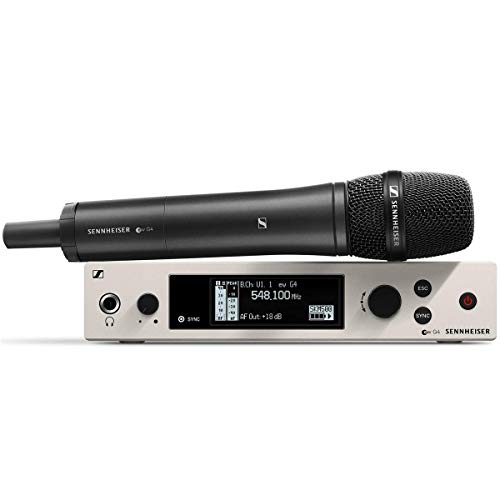
Wireless vocal set
Pros and Cons of Dynamic Microphones
Hey there! So, let’s talk about dynamic microphones. These little gems are super popular because they’re durable and reliable. You don’t even need to plug them in— they work completely on their own with mechanical parts. This makes them perfect for all sorts of situations, especially when you’re out performing live.
One of the great things about dynamic mics is how well they can isolate the sound you want to capture, which means they’re great at blocking out background noise. For example, if you’re singing on stage, you’re less likely to pick up the sound of that crowd chatter in the background. Plus, they perform best when you’re really close—like just 5 to 15 cm away from the mic.
Now, here’s the flip side: dynamic microphones aren’t as sensitive as condenser mics, so they might miss some of those subtle details. If you’re recording in a studio and want to capture every little nuance of the sound, you might want to consider a condenser mic instead. But for most live performances and situations where durability matters, dynamic mics are tough to beat. They often feature cardioid polar patterns, which help enhance vocal clarity by isolating the sound source effectively.
Recommended Products

Wireless lavalier set , Includes (1) SK 500 G4 body pack, (1) MKE 2 Gold lavalier microphone (omnidirectional, condenser), (1) EM 300-500 G4 rackmount receiver and (1) GA3 rack kit

True Diversity half-rack receiver in a full-metal housing with intuitive oiled display for full control

True Diversity half-rack receiver in a full-metal housing with intuitive oiled display for full control
How Condenser Microphones Work
Hey! So have you ever wondered how condenser microphones work? They’re pretty cool because they give you incredible clarity when recording. At the heart of a condenser mic is a tiny piece called a diaphragm. This diaphragm moves closer or farther from a backplate, which changes something called capacitance. Basically, this movement translates the sound waves into electrical signals, making them perfect for capturing vocals or acoustic instruments.
Now, one important thing to know is that condenser mics need a bit of extra power to work. They usually require phantom power, which is often 48 volts. You can get this power from audio interfaces or mixers, making it pretty simple to set up. When placed about 10 to 20 centimeters away from your sound source, they can really bring out all the details in your audio.
But here’s a catch: these microphones are a bit delicate and can get damaged or distorted if exposed to loud sounds. So, you’ll want to handle them with care! It’s fascinating how something so small can make such a huge difference in sound quality. Additionally, many condenser microphones offer a cardioid polar pattern which helps minimize background noise while focusing on your voice. Next, let’s look at how they compare to dynamic microphones and when to use each type.
Advantages and Limitations of Condenser Microphones
When you think about condenser microphones, you’ll quickly notice their unique abilities. These mics are super sensitive, which means they can capture a broad range of sounds really well—perfect for recording vocals and acoustic instruments that often require detailed audio. But there’s a catch: to work, they need 48V phantom power, which typically comes from an audio interface or mixer. This can make setting them up a bit tricky for some folks, especially if you’re using multiple devices.
In the studio, condenser mics shine when it comes to high-frequency sounds; they really bring out the clarity and detail in your recordings. For instance, if you’re recording a singer belting high notes or a delicate acoustic guitar, you’ll appreciate that crisp sound. However, they can distort when faced with loud sounds, like drums or electric guitars. Plus, their higher self-noise means that if you’re in a quiet room, those subtle background sounds might creep into your recording. So while condenser microphones deliver fantastic audio quality, it’s essential to keep these nuances in mind when you’re deciding which one to use for your project.
Now that you have a good grasp of what makes condensers special, let’s explore other microphone types and how they stack up against these beauties. For content creators looking to integrate their microphones into a streamlined setup, considering low latency performance in accompanying hardware is also important to ensure real-time audio clarity.
Recommended Products

Circuit topology Four dual triode vacuum tubes (Sovtek 6922), high-voltage discrete Class A

DuoPre XLR Microphone preamps, including 48V Phantom power for condenser microphones and up to 69dB of gain. Each preamp uses two gain stages to provide a full and accurate sound across the entire gain range with enough power for even the most gain hungry mics.

For Recording Studios and Touring
Choosing the Right Microphone for Your Recording Needs
Choosing the right microphone for your recording needs can be a bit daunting with so many choices out there. Think of it this way: it’s like picking the perfect tool for a job. If you’re looking to record in a quiet studio setting, a condenser mic might be your best bet because it captures those fine details beautifully. For example, if you’re recording a soft acoustic guitar, the sensitivity of a condenser can really pick up those subtle nuances.
On the other hand, if you’re in a lively environment, like a crowded venue or outdoor setting, a dynamic mic is a solid choice. These mics are built tough and can handle loud sounds without distortion, making them perfect for live performances or spoken word events. Plus, if you often record vocals, look for a cardioid pattern mic, as it picks up sound directly in front while minimizing background noise.
Ultimately, having both types of microphones gives you the flexibility to tackle different recording scenarios. This way, you can capture sound with precision, no matter the situation. Now, let’s talk about how to set up your recording space efficiently to get the best sound quality possible. Moreover, considering the microphone’s signal-to-noise ratio is crucial for achieving clear and professional audio.
Recommended Products

Large-diaphragm Condenser Microphone

Variable large diaphragm microphone

Three distinct tube microphones at the flip of a switch. FORWARD is bold, present and modern, but never harsh. NEUTRAL is smooth and earthy with a natural balancing of sibilant sounds. GENTLE is dark and sultry with a warm vintage feel, ideal for taming bright or abrasive sound sources.
Best Practices for Using Dynamic and Condenser Microphones
Hey there! If you’re interested in audio recording, mastering microphone best practices is essential, especially when dealing with dynamic and condenser microphones. For dynamic microphones, it’s all about where you place them. Ideally, keep them about 5-15cm (or 2-6 inches) from the sound source. This distance helps capture crisp audio while cutting down on background noise. Imagine you’re recording a singer—getting that mic close can really bring out the vocals without the distraction of outside sounds.
On the flip side, condenser microphones work best when you position them around 10-20cm (about 4-8 inches) away. This allows you to capture a fuller sound, and if you’re using a pop filter, you’ll notice a huge reduction in pesky plosive sounds. Think of a spoken word artist or a podcast host; having that slight distance creates a professional sound that feels polished.
Live performances are another area where dynamic mics shine, as they do a great job of rejecting ambient noise, allowing the main audio to come through clearer, even at high volume. Don’t be afraid to experiment a bit with angles and how close you get to the mic. You might find a specific spot or tilt that brings out an amazing quality in your recordings. Remember, it’s all about learning and making adjustments to find what works best for you.
As you explore these techniques, you’ll start to appreciate the subtle differences in sound between dynamic and condenser microphones. Using a boom microphone arm can help you maintain optimal mic positioning and reduce handling noise. Let’s chat more about how you can take your recordings to the next level!
Debunking Myths About Dynamic and Condenser Microphones
Hey there! So, you know how dynamic and condenser microphones have their own unique quirks? A lot of folks mistakenly think that dynamic mics just don’t stack up when it comes to sound quality, but that’s not quite true! They really shine when it comes to handling high sound pressure levels, making them perfect for louder live performances. For instance, if you’ve ever been to a concert, you probably noticed the lead singer belting out notes without any distortion—most likely because they were using a dynamic mic.
Now, on the flip side, we have condensers, which are fantastic for capturing those subtle details in quieter studio environments. If you’re recording vocals or acoustic guitars, a condenser mic can really make those nuances pop! But here’s a cool tidbit—while it’s a common belief that only condensers need phantom power, some active dynamic mics can actually benefit from it too. This means they can deliver even better sound quality!
It’s also worth mentioning that not all dynamic mics can take on every sound level without a hitch. Each type has its own specific handling limits, so if you’re using one for an especially loud source, just make sure to check those specs. And about that notion that condensers always pick up more background noise? That’s a bit of a myth too! Both types can capture ambient sounds, depending on how close they are to the source and the environment they’re in.
When choosing between them for streaming or podcasting, consider the polar pattern since cardioid patterns help isolate your voice by reducing background noise, which both condenser and dynamic mics can have.
How to Assess a Good Microphone?
So, how do you figure out what makes a good microphone? It’s actually pretty straightforward when you break it down. First off, think about sensitivity. This just means how good the mic is at picking up sounds, especially in quieter spaces. For instance, if you’re planning to record some soft vocals in a studio, you’ll want a mic with higher sensitivity. But if you’re at a loud concert, a lower sensitivity mic will help keep everything clear without distorting the sound.
Next, let’s talk about the polar pattern. This is just a fancy way of describing how a microphone picks up sound from different directions. For example, cardioid mics are perfect for focusing on a single sound source, like your voice, while omnidirectional ones can pick up sound from all around, which is great for capturing group discussions.
Another important factor is SPL handling, or Sound Pressure Level. This tells you how loud of a sound the mic can handle without getting all fuzzy. So if you’re working with powerful instruments like electric guitars or drums, go for a mic that has high SPL capabilities.
Finally, don’t overlook the build quality. If you plan to take your mic to gigs or outdoors, you want something sturdy that can withstand a bit of wear and tear. Understanding these aspects will help you choose the right mic for your needs, keeping unwanted background noise at bay. Ready to explore which microphones suit your recording style best? Let’s keep it going!
Additionally, to capture sound with great detail and clarity, pairing your microphone with an audio interface offering 24-bit/192kHz resolution can significantly elevate your recordings.
Frequently Asked Questions
Which Is Better, Condenser Mic or Dynamic Mic?
Determining which microphone is better depends on intended use. For studio recording, condenser mics provide vocal clarity and superior frequency response, while dynamic mics excel in live performance due to durability, sound pressure handling, and budget considerations.
What Are the Disadvantages of a Dynamic Microphone?
Dynamic mic limitations loom large, plaguing sound quality with lower sensitivity and perplexing frequency response issues. While durable, they suffer from handling noise, struggle with vocal reproduction, and face challenging cost considerations affecting recording versatility in various settings.
What Are Dynamic Microphones Best Used For?
Dynamic microphones are best used for live performances, vocal recording, instrument amplification, and podcasting applications. Their durability, feedback rejection, sound isolation, affordability factors, and studio versatility make them ideal in various environments.
What Are Condenser Microphones Best For?
Condenser microphones are best for studio recording, enhancing vocal clarity and capturing intricate acoustic instruments. Their excellent sound quality and versatility options make them ideal for home studios, podcast production, and even certain live performances needing ambient sound fidelity.


